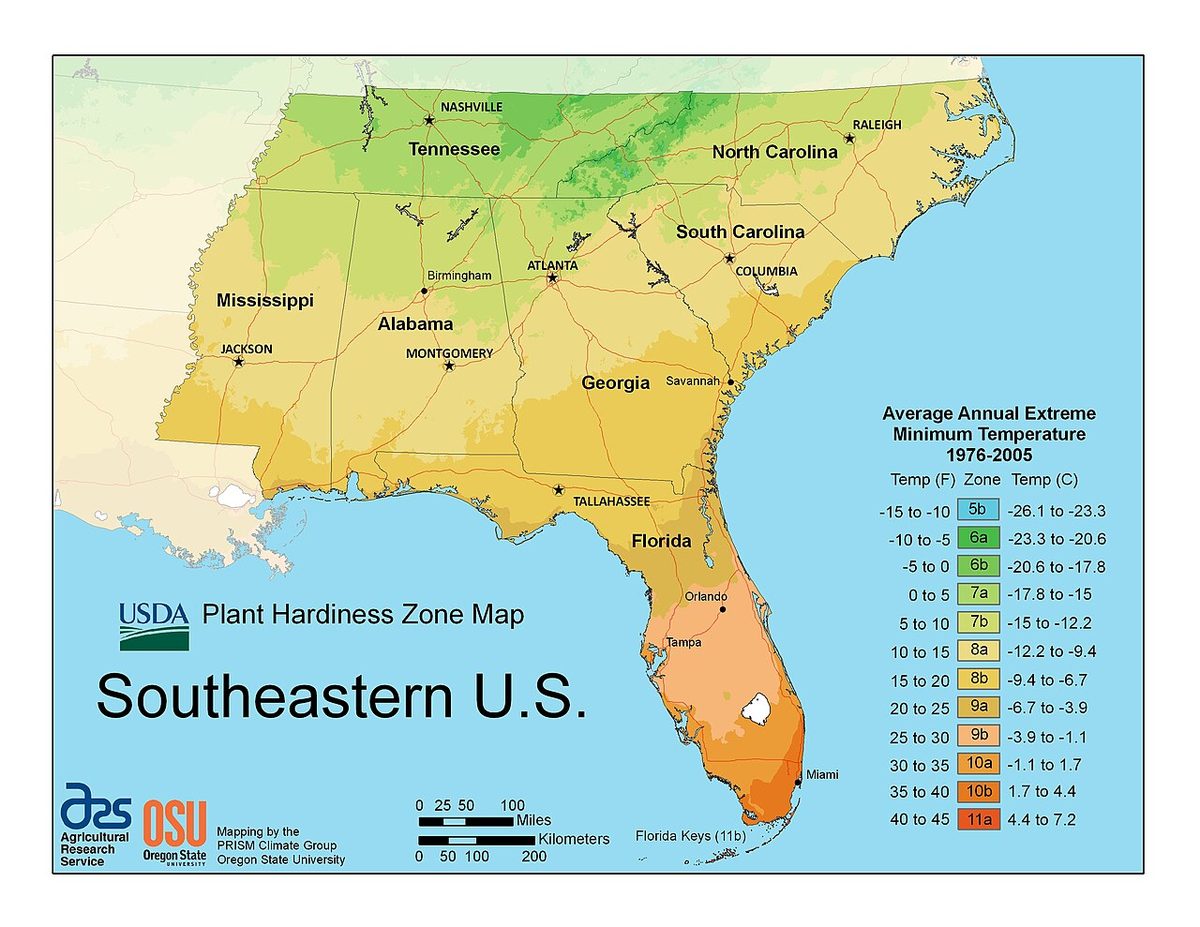
How to read a growing zones map, what the a/b halves mean, and why microclimates bend the rules on real streets. It sounds specialist, but like most gardening it comes down to a few fundamentals done in the right order — this guide walks through them one at a time, with the timings and quantities that actually matter.
What you will need
- A current hardiness zone map
- Your town or ZIP code to locate
- A note of your coldest winter night
- Your average frost dates for comparison
- A notebook for your zone and microclimate notes
Step by step
Step 1
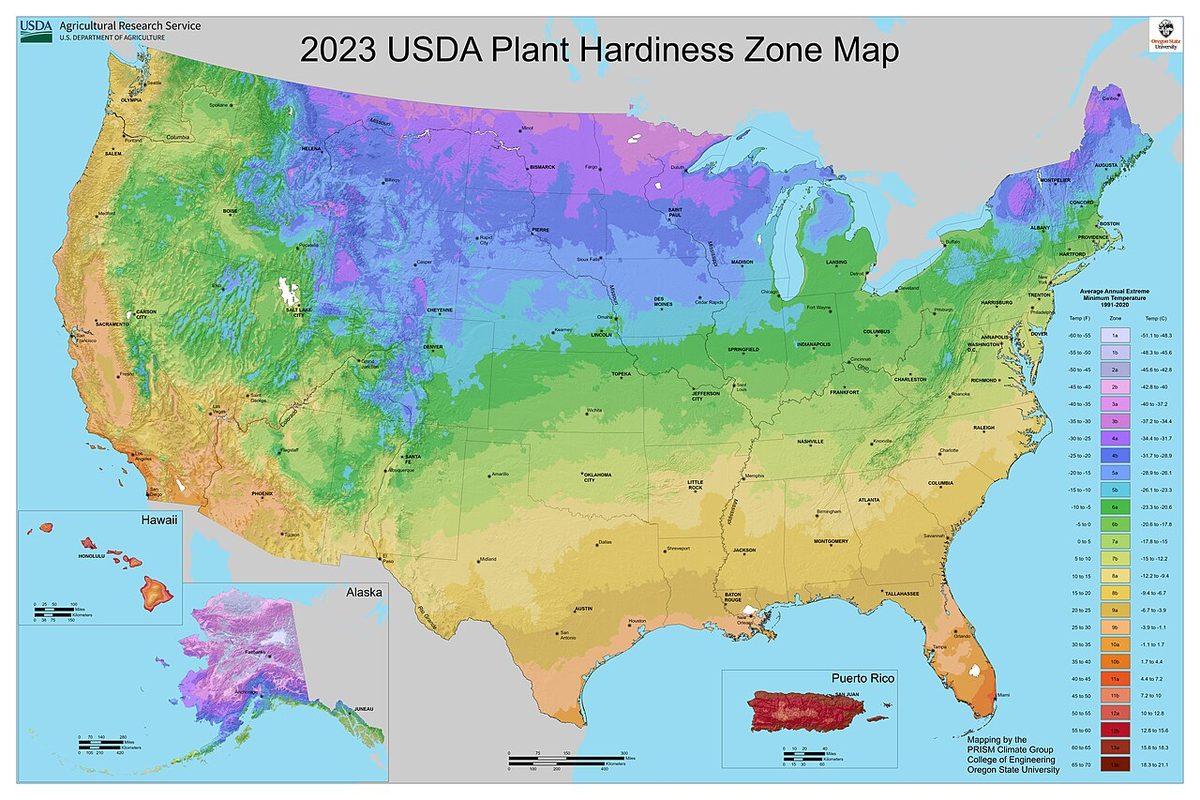
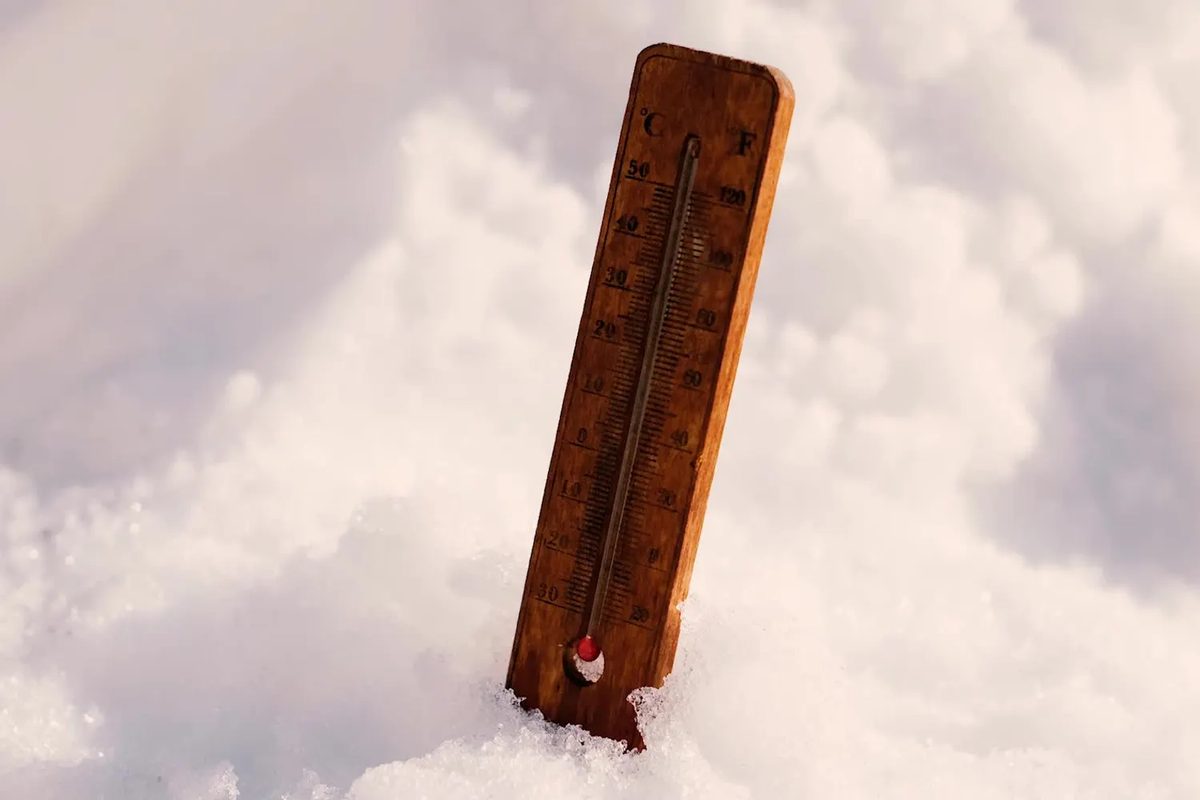
Find your town on the map and read its color band — each band is one range of average coldest winter nights, and that single number is what the whole map is drawn from.
Step 2
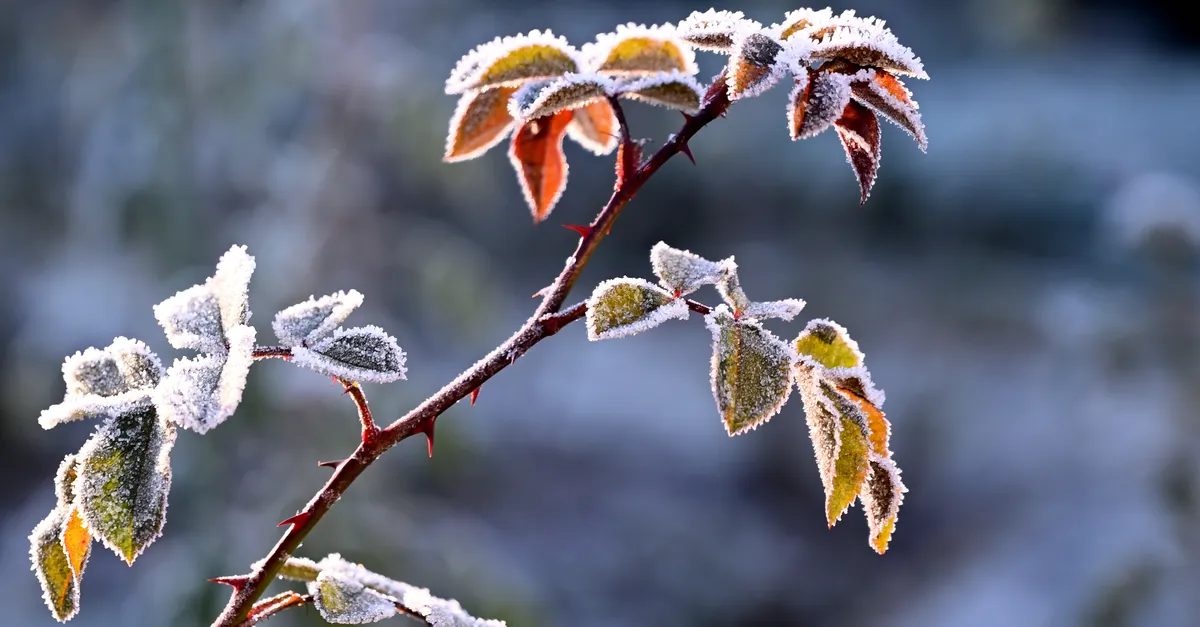
The map shows winter cold, not frost dates — read your last and first frost dates alongside it, because two gardens in the same color band can frost weeks apart.

Step 3
Once you know your band, read plant labels by it: the zone range on a label is a promise about winter survival, and the a/b half tells you which end of the band you sit in.
Step 4
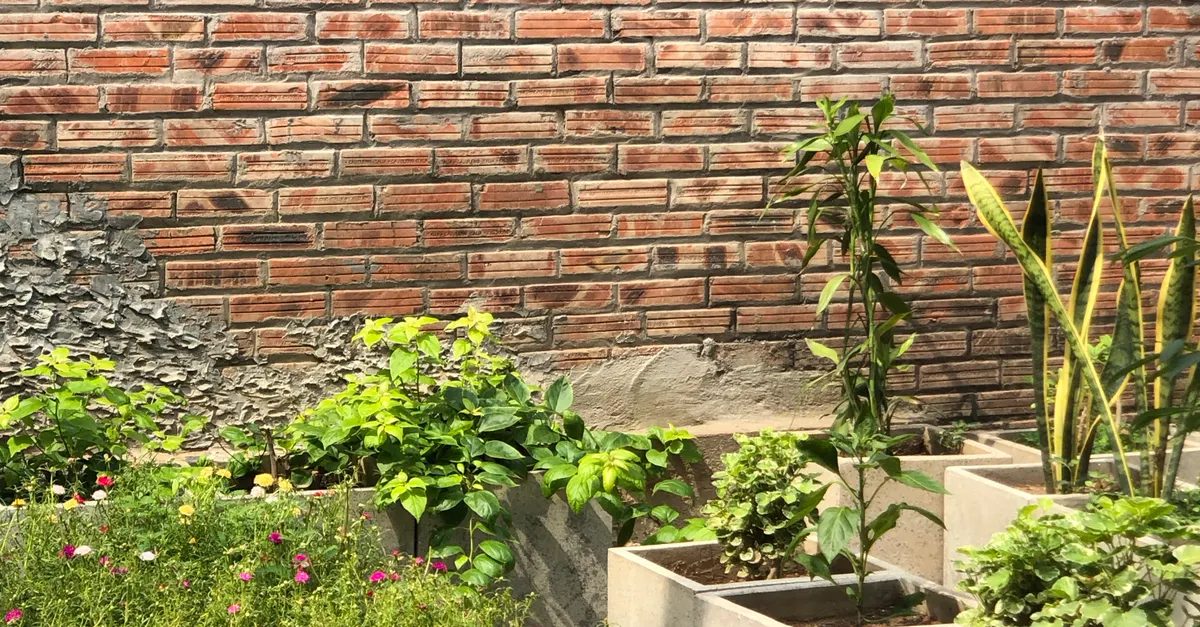
Maps smooth over real streets — a brick wall that stores daytime heat, or a hollow that pools cold air, can shift your effective zone by a full step either way.
Step 5
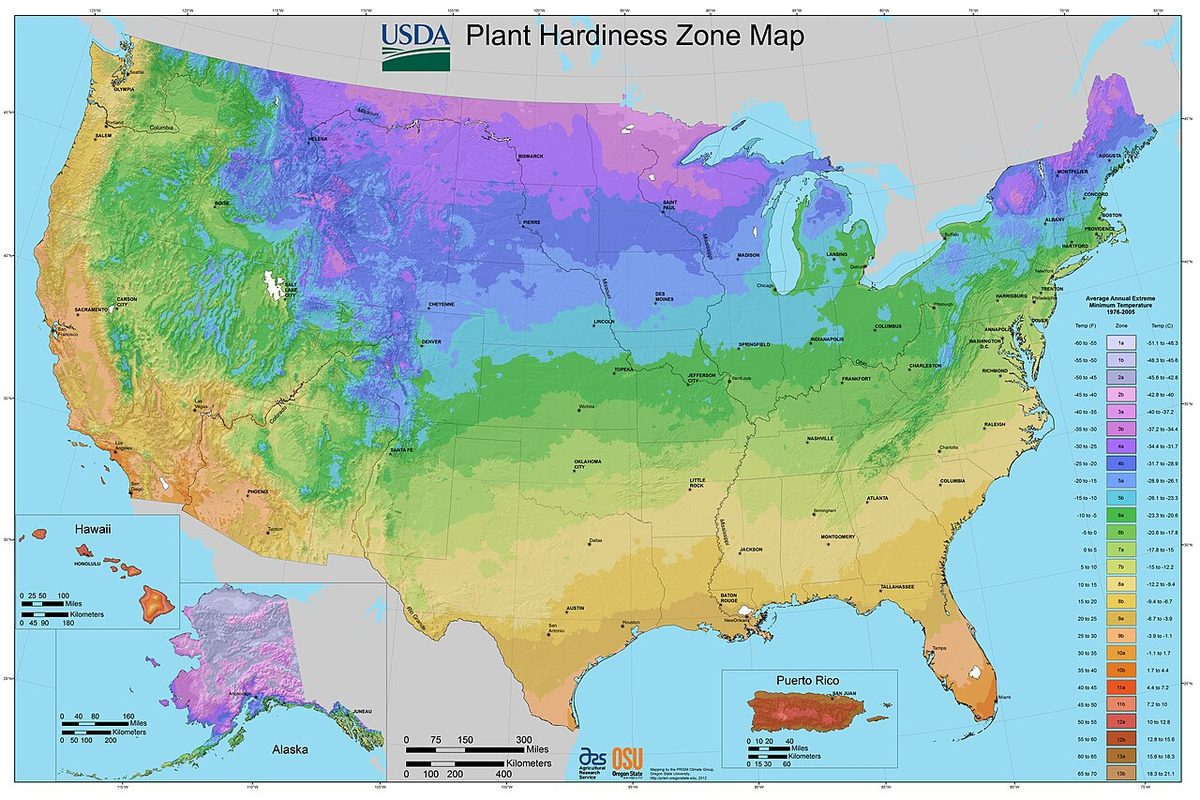
Maps are redrawn as winters change, so check for a newer edition every few years — a run of milder winters can move your band, and one brutal winter can argue the other way.
Expert tip
Write down the date you do this. Gardening advice is full of ‘weeks later’ — and the gardeners who improve fastest are the ones who can check what ‘later’ actually was.
Common mistakes
Watch out for
- Reading the color bands as exact lines — boundaries are averages, and real gardens vary street by street.
- Ignoring the a/b halves — a 6a garden and a 6b garden differ by a full 5°F of winter cold.
- Treating the map as a sowing calendar — it says nothing about frost dates or summer heat.
Keep exploring this topic with Planting Zones by Zip Code: Find Your Growing Zone, or browse the full Planting Zones & Seasonal Planting section.
Frequently asked questions
How do I read the a/b halves on the map?
Each numbered zone is split into two halves of 5°F. The ‘a’ half is the colder half and ‘b’ the warmer half — zone 6b runs warmer in winter than zone 6a.
Why does my neighbor’s garden behave like a different zone?
Microclimates. Walls, slopes, hedges and hollows change how cold a spot actually gets, so two gardens on one street can differ by a full zone.