Houseplants need only a little food, but they need it at the right time. The half-strength monthly routine that keeps indoor plants growing without burning their roots. It sounds specialist, but like most gardening it comes down to a few fundamentals done in the right order — this guide walks through them one at a time, with the timings and quantities that actually matter.
What you will need
- A balanced liquid houseplant feed
- A watering can with a narrow spout
- A measuring cap or syringe for dosing
- Soft water or rainwater if your tap water is hard
- A saucer to catch runoff
- A calendar or phone reminder for feeding day
Step by step
Step 1
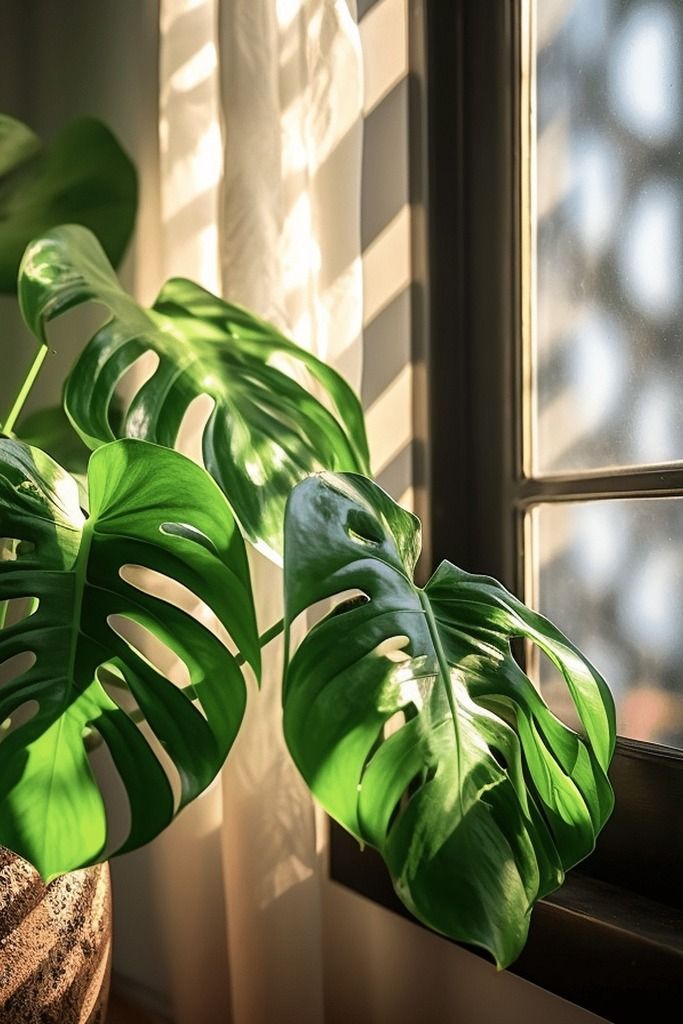
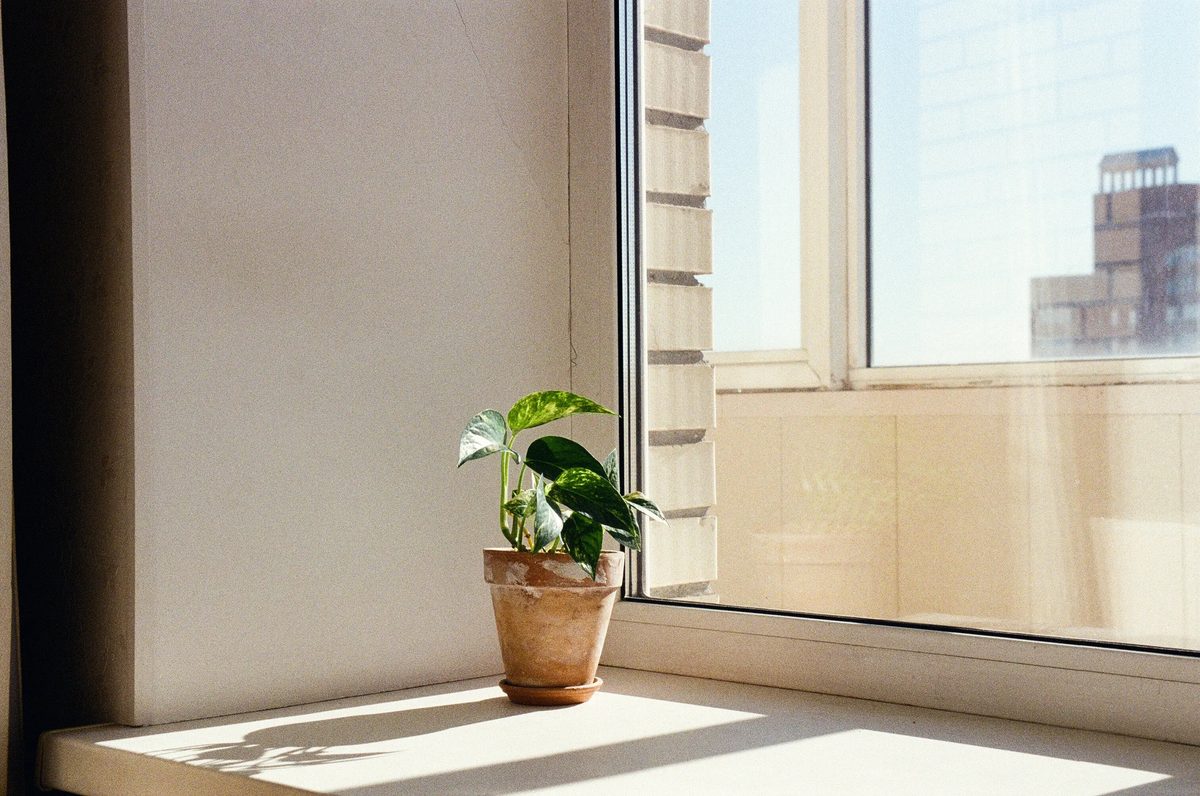
Put the plant in its best light before you feed it — fertilizer only helps a plant that is already photosynthesizing, so check the spot first and move the plant to bright indirect light if it has been sitting in a dim corner.
Step 2
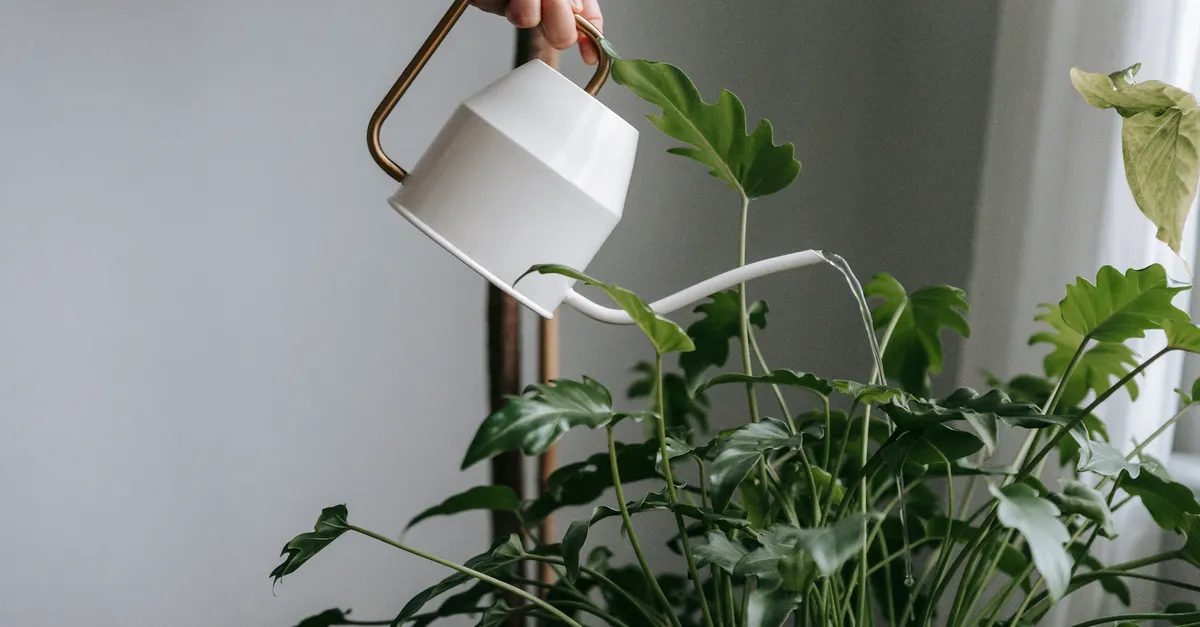
Water first with plain water, soaking the compost until it drains freely — feeding a dry plant burns the roots, so always water before you feed, never the other way round.
Step 3
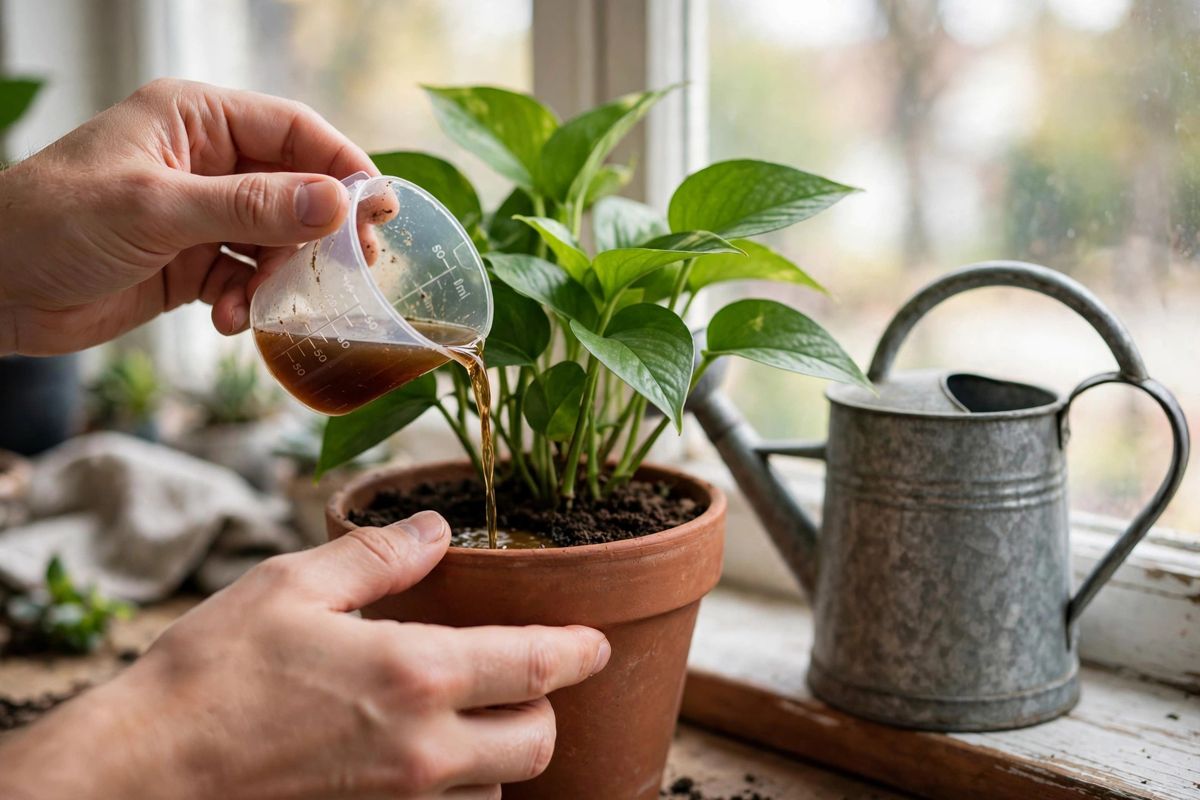
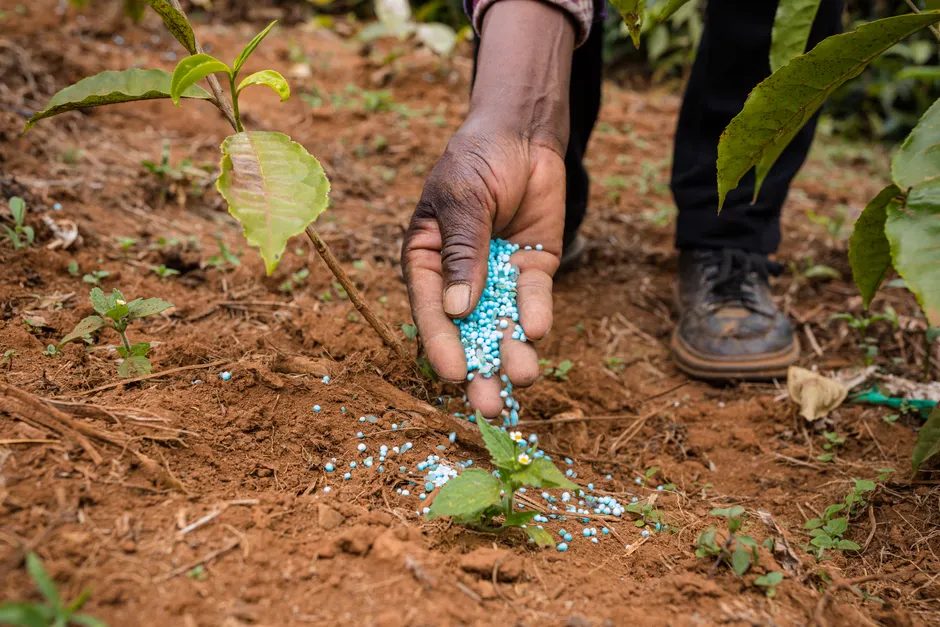
Mix the liquid feed at half the label strength and pour it over the damp compost once a month from spring to early autumn — half-strength monthly beats full-strength rarely, and it keeps salts from building up in the pot.

Step 4
Wipe the leaves with a damp cloth on feeding day — clean leaves catch more light, and feeding day is the natural moment to check the undersides for pests before they spread.
Step 5
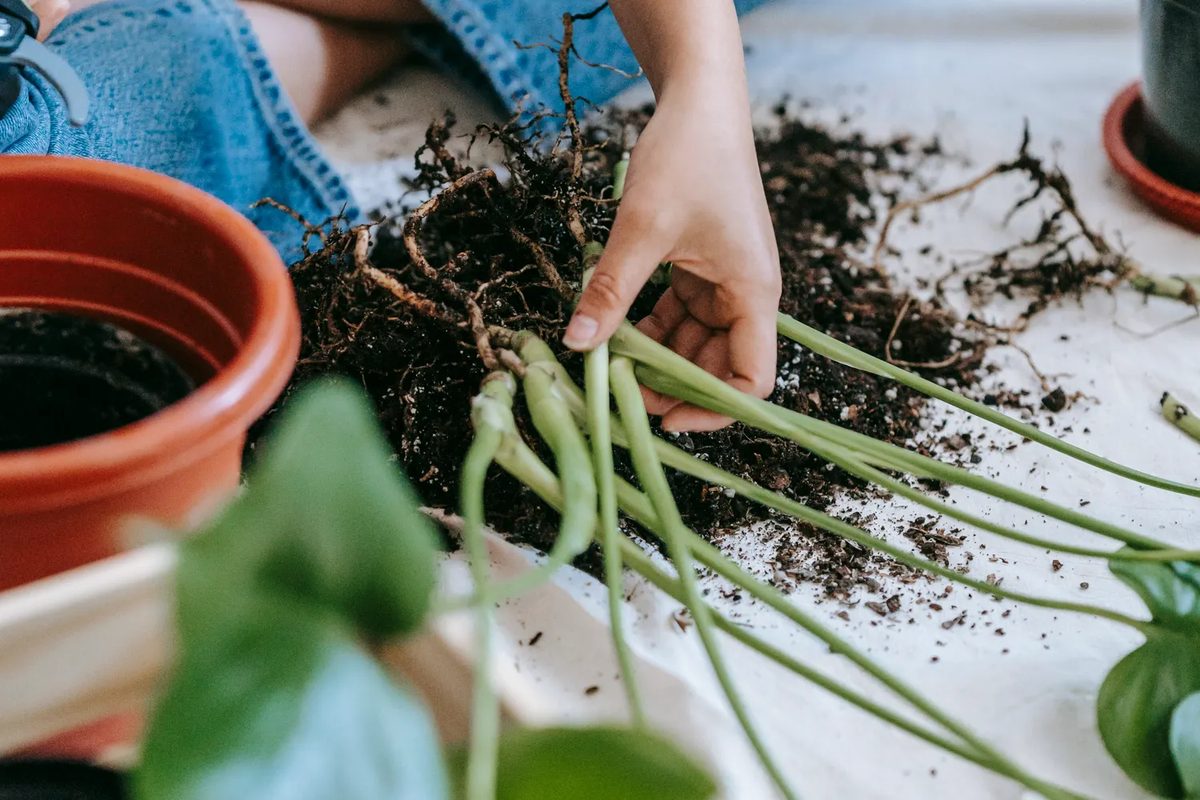
Repot in spring if the roots are circling the drainage hole, and wait two weeks after repotting before feeding again — fresh compost already holds food, and feeding on top of it doubles the dose.
Expert tip
Write down the date you do this. Gardening advice is full of ‘weeks later’ — and the gardeners who improve fastest are the ones who can check what ‘later’ actually was.
Common mistakes
Watch out for
- Feeding a dry plant — fertilizer on dry roots burns them within hours; water first, always.
- Feeding in winter — growth has paused, so the salts sit in the compost and scorch the roots.
- Using full-strength feed on a small plant — half strength monthly is the safe rule for indoor plants.
Keep exploring this topic with How to Grow Flowers Indoors, or browse the full Houseplants & Indoor Care section.
Frequently asked questions
How often should I fertilize houseplants?
Once a month from spring to early autumn, at half the label strength. Stop in winter when growth pauses — the plant cannot use the food, and the salts build up.
Can I use garden fertilizer on houseplants?
No — garden fertilizer is far too strong for a pot. Use a balanced liquid houseplant feed, and dilute it to half strength for most indoor plants.